What to do with your old Garmin watch

So you're planning to upgrade your Garmin watch, and you're not sure what to do with the old one. Your first thought might be to list it on eBay, and that's certainly an option, but it's not the only one. Here we've put together a list of ideas to help give your old sports watch a second life, or dispose of it responsibly if it's truly past the point of no return.

Keep it as a backup

The Garmin Connect app is excellent, not least because it allows you to connect multiple devices (watches, bike computers, power pedals, and more), and pool all that lovely data in one convenient place. If you've bought yourself a new watch, there's no reason why you can't set that one as your primary device, and leave your older one configured as a backup.

There are various reasons why you might want to do that. For example, your older watch might be a little slimmer than your new one (particularly if you've invested in a chunky Fenix 7), so you might want to keep the older one for everyday wear and only break out the new one for training sessions when you really need all its extra functions.

Alternatively, you might want to keep the older watch to use while your newer one is charging. Garmin has made great progress with battery life in recent years, but unless you're using an Instinct Solar in power-saving mode, you'll still need to plug it in occasionally. Even if it's just to capture a few extra steps or the occasional night's sleep, having a spare watch means you won't have any gaps in your daily data.

Use it as a bike computer

Garmin made its name in satellite navigation, and its Forerunner watches make great little bike computers when attached to your handlebars. You won't get the biometric data you would it if was on your wrist, but it's easier to read when you're riding, and you can get turn-by-turn directions on-screen.

Garmin sells a neat mounting system that allows you to attach your watch's body to your bike with a quick twist, and detach it just as easily. It costs $29.99 / £26.99 / AU$49 and is compatible with a wide range of watches, including the Fenix 6 and 7, Quatix 6 and 7, Epix (Gen 2), Enduro, D2 Mach 1, and Tactix 7 and Delta.
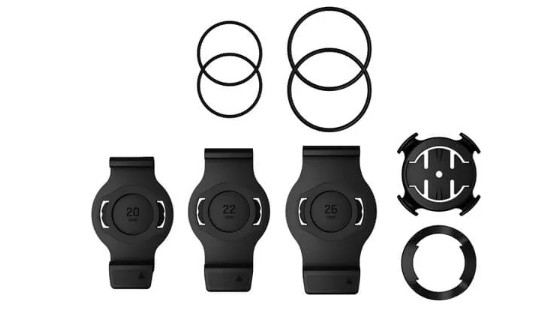
Garmin bike mount for smartwatch

(Image credit: Garmin)

If your watch isn't compatible, or you don't want to splash that much cash, there's also a less sophisticated mount that attaches to your bike with cable ties and allows you to buckle pretty much any Garmin watch in place during rides. It costs $14.99 / £10.99 / AU$17.99.

If your watch is still in working condition, you could donate it to a worthy cause. There are charities like RecycleHealth in the US that accept working sports watches and fitness trackers. Alternatively, have a look for clubs and organizations in your area that focus on making sports more inclusive, and get in touch to see if they'd be interested in receiving it.

Sell it

If you really don't need two Garmins in your life, or you want to recoup some of the cost of your new watch, selling it may be the best option. First of all, make sure all your data is synced with Garmin Connect so you don't lose any of your precious stats, then open the left-hand menu in the app and select 'Garmin devices'. Tap the watch that you want to sell, then tap the menu icon at the top right and select 'Remove device'.

Your watch contains all kinds of sensitive data, including GPS information, so it's important to perform a factor reset before selling it. Start by powering it off, then press and hold and back/lap button. Once the 'Clear user data' option appears, release the button and select 'Yes'. If your watch doesn't have a back/lap button, check out the manual to find out how to clear your data; you can find the manual by searching for your watch model on Garmin's website.
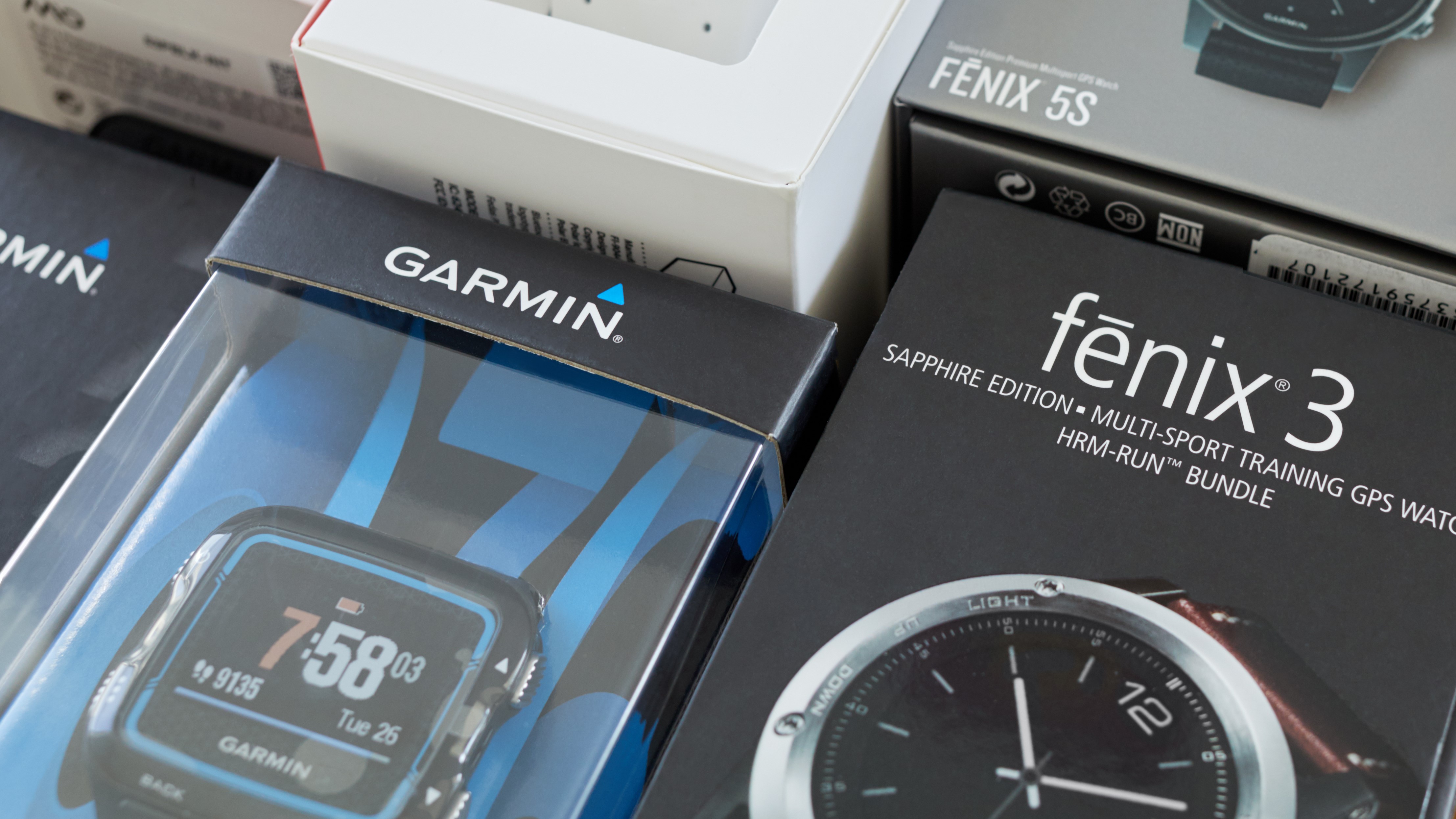
Garmin watch boxes

You don't need the original box to sell your Garmin watch, but make sure you package it securely and send using a service that accepts lithium batteries (Image credit: Pavel L Photo and Video / Shutterstock)

When shipping your watch off, make sure it's well packaged and take note of any restricted items that your chosen shipping company won't handle. Some refuse to deal with lithium ion batteries like the one inside your Garmin watch.

Even if your watch isn't in full working order, you might still be able to get a little cash by selling it for parts. Just make sure you're fully transparent about any faults.

Recycle it

If your watch is broken, then recycling is another option. It's important to make sure your watch goes to the right place, so that its lithium battery is dealt with safely and any other hazardous materials can be handled properly (some LCDs contain small amounts of mercury, for example).
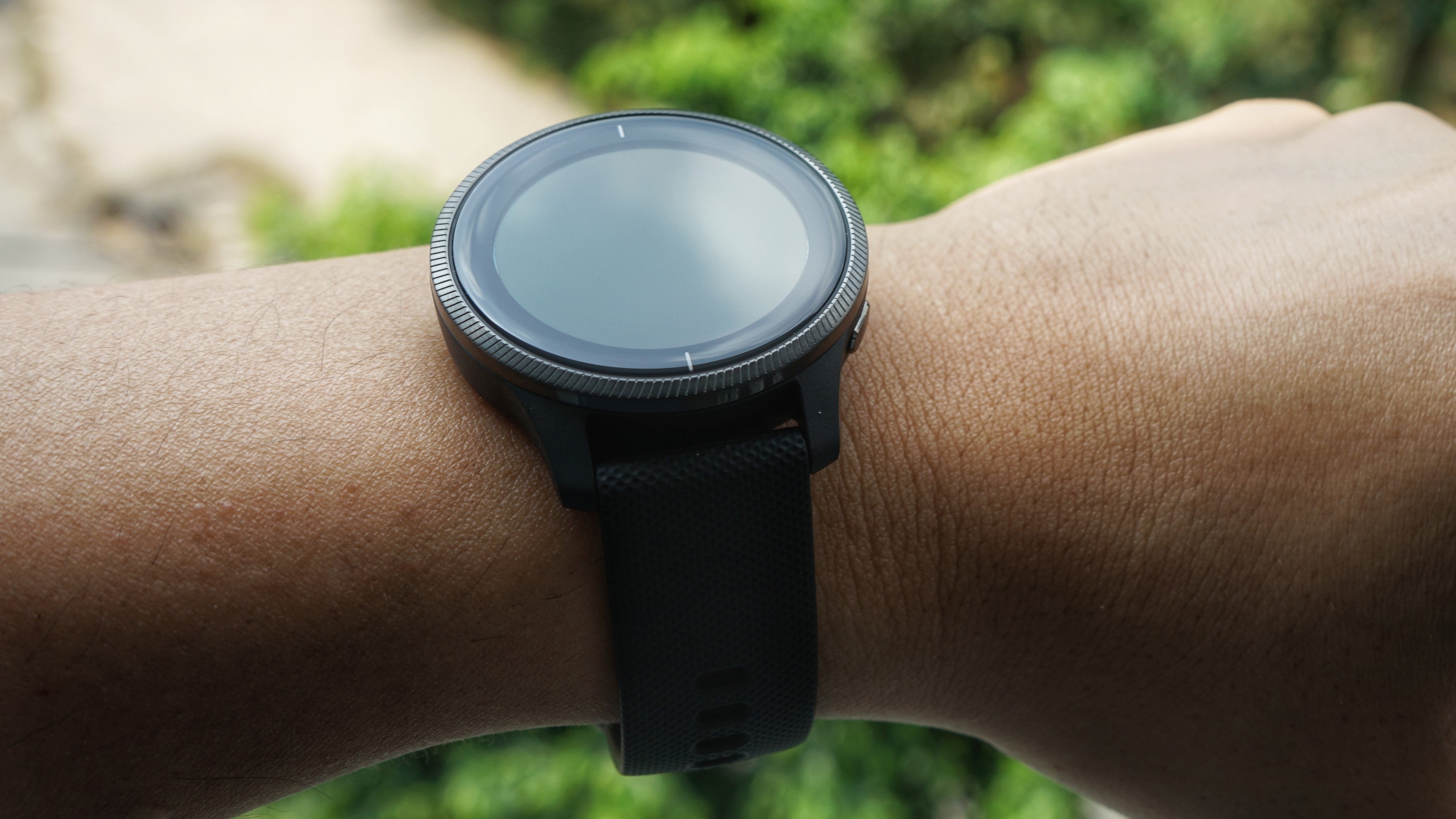
Garmin watch with blank screen

If your watch is broken and you want to dispose of it, make sure it goes to a facility that deals with waste electronics (Image credit: Shutterstock / Hikari0909)

You might already know a nearby recycling facility for waste electrical and electronic equipment (WEEE), but if you're not sure, Garmin itself can provide details of places that can process your watch safely. Just fill in an online form including your name and the name of the device you want to recycle. Alternatively, Googling 'WEEE recycling near me' should bring up some helpful results.

If you can't find anything, try calling an electronics retailer near you. Many of them run their own WEEE recycling schemes, and some will even give you a store discount for bringing them your old tech.

It's worth hanging onto the charging cable, though. All Garmin watches released in recent years use exactly the same type of charger, and you never know when a spare might come in handy.


from TechRadar - All the latest technology news https://ift.tt/r6N0OUq
Share:

Steam Deck won’t install a game as it’s blocked? Don’t panic, Valve says this is just a glitch

Some Steam Deck owners recently started to worry that it might be possible for developers to block their games from being played on the handheld gaming PC, but Valve swiftly confirmed this isn’t the case, and the confusion has arisen over what’s actually a ‘technical issue’ and a mistake – which has now been fixed.

This started on Twitter where it was observed that Demon Gaze Extra, a JRPG, seemed to be configured so that it couldn’t be installed on Steam Deck (but if you downloaded on the desktop and transferred the game files across, it did work).

This raised the possibility that some game developers were intentionally flagging their titles and blocking them from being installed on Valve’s device, but the Steam Deck maker soon made it clear that this wasn’t the case.

See more

In an email to PC Gamer, Valve explained that: “Before the Deck launch, we added a feature to allow developers to tag certain content/depots as being relevant only for Deck customers.

“This would allow developers to automatically deliver a different default graphics config on Deck, for example. There was a technical issue with the way this feature was shipped, and so unfortunately some content was incorrectly tagged as the reverse (“deliver these depots to every customer *not* on a Deck”).”

Valve further noted that the relevant feature has been updated so it’s not possible for developers to accidentally flag their games as blocked anymore, and for any games which are already in the quandary where they can’t be installed due to this glitch, Valve says it’s “working with partners to fix the issue”.


Analysis: A bit of ado about nothing

This turned out to be a bit of fuss about nothing much, then, thankfully; and hopefully any affected games will be sorted out by Valve and the respective game devs before long.

Valve certainly seems serious about making quick progress with the Steam Deck in terms of responding to issues that pop up, as we’ve seen with the recent beta release that seems to tackle the fan whine problems that some owners have complained about.

Admittedly, the lessened noise does come with a rise in internal temperatures with the device, but remember that the fan fix is still in beta, and hopefully with more testing, any undesirable side-effects should be ironed out. (Note that temps don’t get problematically high, either – PC Gamer itself has done some testing and that’s reportedly the case even with more demanding titles like Elden Ring).

Game compatibility is moving forward with some speed too, as Valve recently let us know that it has now brought over 2,000 games into the verified or playable fold – basically those titles rated as working well with the Steam Deck – and the majority of the most popular PC games are in this category, too.


from TechRadar - All the latest technology news https://ift.tt/Bbm8AHR
Share:

What time is Moon Knight episode 6 released on Disney Plus?

It's nearly time to say goodbye to Marc Spector, Steven Grant, and company. 

That's right, the final episode of Marvel Studios' Moon Knight is almost upon us, with the MCU Phase 4 TV show's last entry set to air very soon on Disney Plus. It's been a trippy, surreal, mind-boggling, and horror-infused ride so far, so here's hoping that Moon Knight episode 6 will cap off one of the best MCU productions of recent times.

With that in mind, you'll want to know when Moon Knight's sixth (and potentially final) episode will be released on Disney's streaming service. Below, we'll tell you when the Disney Plus show's next episode will launch on the platform. We'll also include a full release schedule for every Moon Knight entry, just in case you want a refresher of when each episode was released.

Before you dive in, you may want to take a look at a couple of our other Moon Knight-centric stories. You can read up on how an episode 5 Easter egg officially ties Moon Knight to the wider MCU, or check out our report on why Marvel's TV shows aren't convincing people to sign up to Disney Plus. Once you've read them, feel free to move on to Moon Knight episode 6's release date and time.

When is the release date for Moon Knight episode 6?

Khonshu gifts Marc his Moon Knight powers in episode 5 of the Disney Plus show

Moon Knight episode 6 arrives on Disney Plus in early May. (Image credit: Marvel Studios)

Moon Knight episode 6 will be released on Disney Plus on Wednesday, May 4 at 12 AM PT / 3 AM ET / 8 AM BST / 12:30 PM IST / 5PM AEST.

US-based fans may want to stay up into the early hours to catch it as soon as it lands on Disney's streaming service. UK Disney Plus subscribers, though, should have a chance to watch it before they head to school or the office.

Indian viewers can check out Moon Knight episode 6 on their lunchbreak (if you're sneaky, that is), while Australian and New Zealand fans will be able to view it once the working day is over.

Regardless of where you'll be watching Moon Knight's series finale, you'll definitely want to take major precautions over potential spoilers. With this being the show's final episode, there's bound to be some spoilers, nods to Moon Knight's MCU future, and maybe even a post-credits scene.

Our advice? Mute hashtags including #MoonKnight, #MoonKnightspoilers, and #MoonKnightepisode6 on Twitter and company to save yourself any heartache. Alternatively, just stay off social media until you've managed to see it.

What is Moon Knight's final episode run time?

Marc Spector fights against his handlers in Moon Knight episode 5

Moon Knight episode 6 is only how long?! Let me at him! (Image credit: Marvel Studios)

Surprisingly, Moon Knight episode 6 will be the shortest entry in the whole series. Industry insider Amit Chaudhari revealed as much on his personal Twitter account, the VFX artist confirming that Moon Knight's series finale will clock in at just 42 minutes.

See more

That seems like too short a runtime to deliver on the many story threads that Moon Knight has left to cover.

We need to learn about how Marc Spector breaks out of the Egyptian afterlife, frees Khonshu, gets his Moon Knight powers back, and stop Arthur Harrow from releasing Ammit from her tomb. Additionally, we have to find out what role Layla will play in all of this, whether Steven Grant is gone for good, and if Marc's third personality – Jake Lockley – will actually make an appearance. Oh, and if there'll be a post-credits scene that may tease Moon Knight's future in the MCU.

Factoring the show's lengthy credits into the equation – these usually take up six to seven minutes of an episode's runtime – that means there may only be 35 minutes of actual story left to tell. That is, unless Chaudhari's 42-minute runtime confirmation doesn't include the show's credits. Here's hoping for the latter.

How many Moon Knight episodes will be released? Full launch schedule

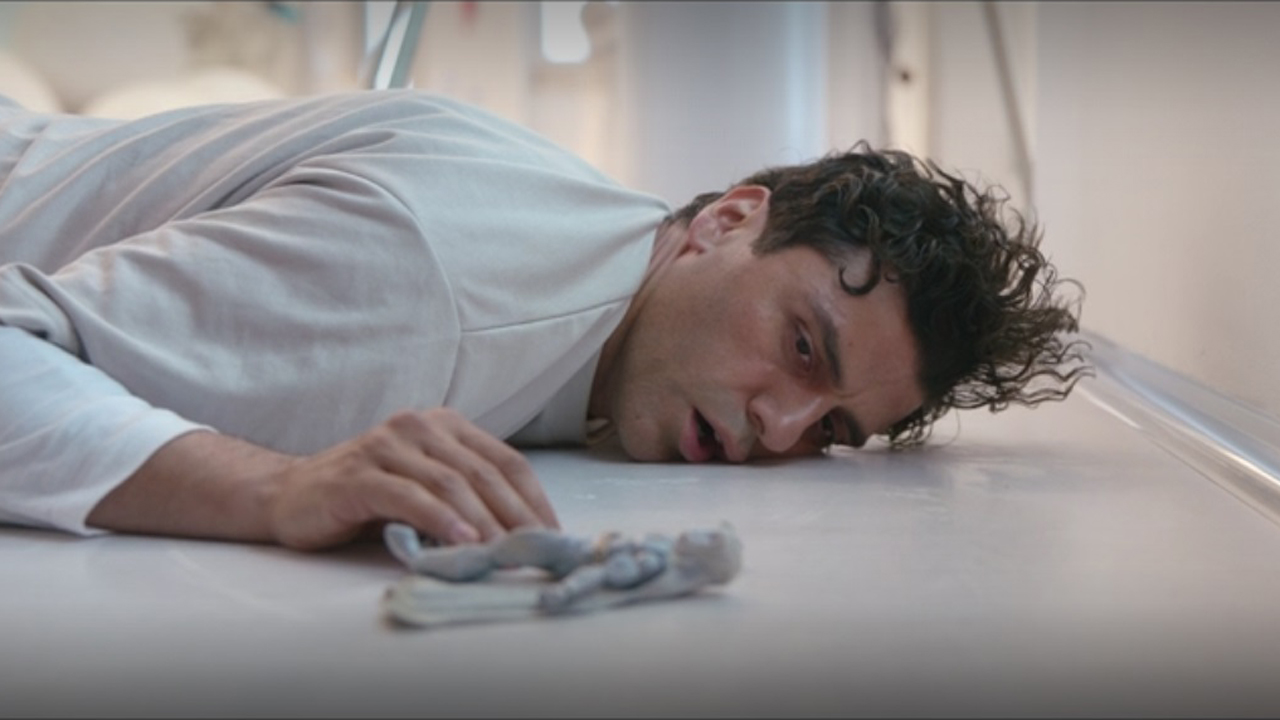
Marc Spector lies on the floor of a psychiatric hospital with a Moon Knight action figure in the Disney Plus show

How is Moon Knight's run on Disney Plus nearly over already? (Image credit: Marvel Studios/Disney Plus)

Here's the full release schedule for Moon Knight, which confirms this is the last entry in the series:

  • Moon Knight episode 1 – Wednesday, March 30 (available to stream now)
  • Moon Knight episode 2 – Wednesday, April 6 (available to stream now)
  • Moon Knight episode 3 – Wednesday, April 13 (available to stream now)
  • Moon Knight episode 4 – Wednesday, April 20 (available to stream now)
  • Moon Knight episode 5 – Wednesday, April 27 (available to stream now)
  • Moon Knight episode 6 – Wednesday, May 4

Thankfully, it won't be a long wait for the next batch of Marvel projects to arrive. Doctor Strange 2 launches exclusively in theaters just two days (one if you live in the UK) after Moon Knight ends, the next MCU movie arriving on May 5 or May 6 depending on where you're based worldwide.

Meanwhile, Ms Marvel will make her live-action MCU debut when her Disney Plus series is released on June 8. Add in Thor 4, She-Hulk, and Black Panther 2 all arriving before the year is out, and there's plenty to look forward to.


from TechRadar - All the latest technology news https://ift.tt/cDB1oG8
Share:

What I'd like to see in Wear OS as we head towards Google IO

It’s been almost a year since Google announced Wear OS 3 at Google IO 2021. And in that time, the new platform has made its way to the Samsung Galaxy Watch 4, with other eligible devices expected to “roll out the update starting in mid to second half of 2022”.  

Wear OS 3 on the Galaxy Watch 4 marked a big step forward for Google’s Wear OS. But even though the Galaxy Watch 4 has received plenty of plaudits, there are still plenty of opportunities for Google to improve upon what it's already done. 

With rumors swirling of a possible Google Pixel watch in the pipeline, Wear OS will be its foundation, which means we may see both appear at Google IO 2022 in May. And if Google wants to be a serious challenger in the smartwatch space, there are a few things we think it should do to make Wear OS as good as possible. 

Google Assistant

One of the most obvious omissions from the Galaxy Watch 4 is Google Assistant. It’s likely that Samsung made the decision to stick with its own virtual assistant, Bixby. Although a post from Verizon (spotted by 9to5Google) about an upcoming system update suggested that Google Assistant support is on its way to that watch, this has been contradicted by Google.

We’d fully expect Google Assistant to make its way onto Wear OS 3 at some stage though, especially on devices that don’t have a Bixby equivalent available. But we really want to see this arriving sooner rather than later.

Just as importantly, we hope to see Google Assistant utilizing the same on-device processing that's offered on Pixel phones. While this does rely to an extent on the hardware that’s supporting it, on-device processing means that Google Assistant is faster, and doesn’t necessarily need an internet connection at all times to complete tasks. This, in turn, could make it less power-hungry.

Improved Battery

Battery life remains one of the single biggest concerns that smartwatch users have to contend with. An Apple Watch Series 7, for example, offers “up to” 18 hours of battery between charges. If you're lucky, on some devices you may be able to go more than a day between charges. But it’s very unlikely you’ll be able to manage more than two days, especially if you want to use your watch to its full potential.

This is why we really want to see Wear OS being as efficient as possible and extending that battery life. Optimized software can go a long way to extending the battery on a smartwatch. And getting over the two-day mark between charges, as a minimum, would be a big boost.

Better iPhone Compatibility

It’s important to acknowledge that Google has made strides in this area. It used to be that iPhone users couldn’t even dream of using a non-Apple watch with their iPhone. But since 2018, when Android Wear became Wear OS, the experience has been significantly improved.

While it's much, much better than it used to be, it's still far from perfect. A quick glance at the app store shows a rating of 1.9 out of 5 for the Wear OS app. Commonly cited issues include the app just not working, or disconnecting and then refusing to reconnect. There are also complaints of  Wear OS watch batteries draining faster than they should when paired with an iPhone.

Perhaps we shouldn’t be surprised to find friction when a Google device is trying to interact with an Apple device. But given that these are now fundamentally mature technologies, we should be seeing better than this. 

The days of manufacturers trapping people in their ecosystem should be over. And consumers should be able to wear whatever smartwatch they want, without instantly facing issues using it.

We’re hoping that Wear OS 3 will make big strides in this area.

Fitbit Integration

One area where Apple has been way out in front of almost everyone has been in fitness tracking. But given that Google completed the acquisition of Fitbit over a year ago, we’d hope that it's found a way to fully integrate all that expertise into Wear OS.

Just consider all the things that WatchOS can support: Sleep, heart rate, ECG, handwashing, cardio fitness, and fall detection. The Galaxy Watch can support blood pressure monitoring. The Fitbit Charge 5 can scan for Electrodermal activity to monitor stress levels, skin temperature, breathing rate, and blood oxygen levels. It’s even possible to track your menstrual cycle.

The point is, there's a wealth of health monitoring features that Wear OS needs to offer if it wants to be seen as a viable competitor to what’s already out there. And if a (Google-owned) Fitbit can offer these features, surely there’s no reason for them to be neglected on Wear OS?

Easier Backup and Restore Functionality

One of the single biggest criticisms of Wear OS has been how clunky it is if you want to set up your watch on a new device. It isn’t always the case that a user has perfectly synchronized changing their handset at the same time as they get a new wearable. One often lasts longer than the other. And, as we know, accidents happen.

Usually, if you want to pair your Wear OS watch with a new device, you need to factory reset it. This means you’ll need to spend time adjusting all your settings, customizing your apps, and choosing your watch faces. This is slow, laborious, and far more work than it needs to be.

The Verizon post we referenced earlier shows how this issue will be addressed on the Galaxy Watch 4 Classic. Using Samsung Smart Switch, watch owners will be able to back up and restore their watch settings before pairing it with a new phone.

But this needs to be a feature of Wear OS, regardless of the watch you're wearing or the phone you're using. 

Hopefully, Google will let us know what Wear OS 3 has in store for us at Google IO 2022. And we’ll see how many of these features, if any, have been implemented.


from TechRadar - All the latest technology news https://ift.tt/qjWQKF4
Share:

Three years after the first 5G phone landed in Europe, 5G still hasn't proven itself

It's been three years since the first-ever 5G phone launched in Europe, and the handsets that have followed it have met with a mixed reception; 5G was expected to be a revolution for mobile tech, but several years of Covid and lockdown have thrown a spanner in the works.

On May 1, 2019, the Oppo Reno 5G landed in Switzerland. The country became an early battleground for 5G phone companies, due to it being one of the first to get 5G networks earlier that year. 

Oppo beat out Huawei and Xiaomi, which launched its first 5G phones literally the following day, although the Samsung Galaxy S10 5G and a mod for the Moto Z4 won the race to be first in other continents.

The victory was a surprise because, at the time, Oppo wasn't as big a force in Europe as it is now. With the past year bringing the Oppo Find X5 Pro, the OnePlus merger and big-ticket sponsorships such as Wimbledon, it's easy to forget that it was quite fresh-faced back in 2019.

At the big European launch, other 5G phone launches thereafter, and 5G network roll-outs all through 2019, one thing was made clear: 5G is the future. But after having used the next-gen connectivity tech in various phones for three years, I'm not convinced that it is.

Why 5G?

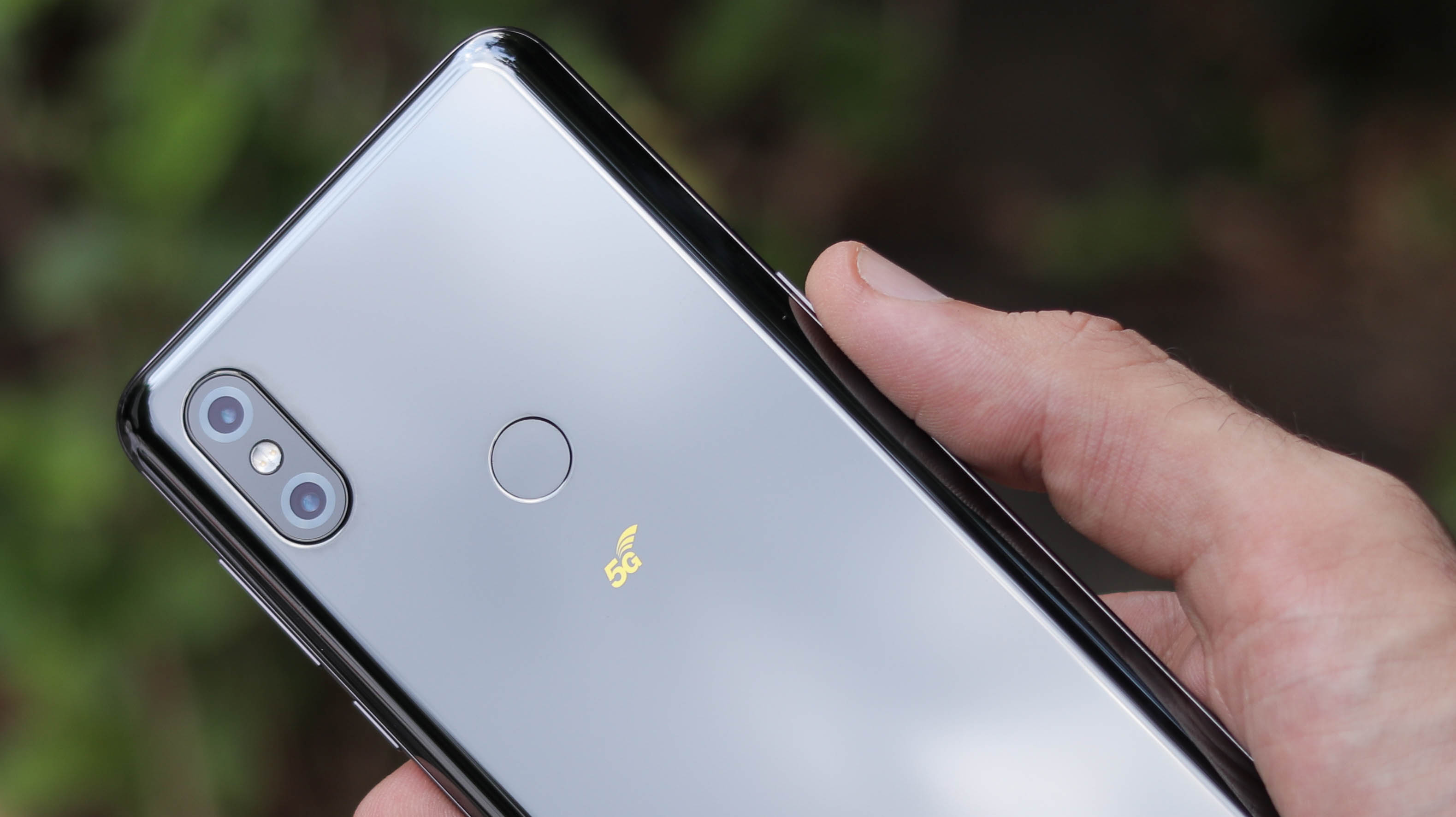
Xiaomi Mi Mix 3 5G

The Xiaomi Mi Mix 3 5G (Image credit: TechRadar)

5G has two core selling points: it delivers faster speeds than 4G, and also promises a more reliable connection – all in theory, of course, because these factors will largely depend on your network and location.

However, the benefits of a more stable connection are that you can download apps, movies or music on-the-go, as well as play online mobile games when you're out and about.

Of course, depending on the area you're in, this is all possible on 4G – but there's more. At several 5G network launches, it was pointed out that 4G initially seemed useless, but following several years of its existence, developers were learning how they could best utilize the tech. The result was apps such as Instagram and Uber, which had failed to work well on 3G.

So in 2019, the future looked bright for 5G, and I was looking forward to all the changes that might come to smartphones in the future. But it's the future now, and I'm still waiting.

5G hasn't proven itself

I've been using 5G phones since the tech launched in 2019, testing different functions on different networks in different countries on different mobiles. However, when someone recently asked me if they needed to buy a 5G phone, I had to be honest, giving the answer "no".

Sure, the novelty of being able to download an episode of a TV show on my way to the Tube was neat, but I never watch TV on the underground, so it was a redundant feature. And sure, making a video call when out and about was quick and easy, but I don't want to inflict my calls on other people; I'd rather save it for when I return home.

Plus, those functions have worked just fine over 4G. In fact, in some places I've tested phones, 4G has been faster than 5G. So far, there aren't any killer apps for 5G, and I'm still waiting for something that you can't do on 4G.

Of course, the pandemic has had a devastating effect on 5G. It was meant to make connecting to the web on-the-move far more convenient; but a couple of years of staying at home have made that far less important.

In addition, user habits have changed; the pivot to working from home and spending more time indoors has seen a resurgence in the use of tablets, and an increase in fitness tech, making 5G a secondary concern for many people.

It's also worth pointing out that 5G modems in phones cause substantial battery drain, and they're also expensive – which bumps up the price of 5G devices.

Hopefully, in the future, apps and software will come along that makes 5G a vital tech – admittedly, I said this in 2019, but three years wasn't enough time. Tech doesn't move as fast as its biggest fan, and companies, want you to believe – and in 2022, buying a 5G phone still isn't a necessity.


from TechRadar - All the latest technology news https://ift.tt/eJdiCOs
Share:

Samsung Galaxy Z Flip 4 leak points to a battery capacity boost

As the expected launch window of August draws closer, we're starting to hear more about what the Samsung Galaxy Z Flip 4 might have to offer – and according to the latest rumor, it might bring with it a modest battery capacity upgrade.

Information obtained by GalaxyClub (via GSMArena) suggests that the upcoming foldable flip phone could come with a pair of batteries fitted, with rated capacities of 2,400mAh and  903mAh respectively.

Do the math and that's 3,303mAh in total. As Samsung and other phone makers advertise what's known as typical rather than rated battery capacities, the phone will most likely be marketed as having a 3,400mAh capacity – up from 3,300mAh on the Galaxy Z Flip 3.

Battery life

In other words, the Galaxy Z Flip 4 looks set to have a slightly bigger battery overall than its predecessor. Whether that will lead to better battery life remains to be seen – it depends what Samsung's engineers have done with the rest of the phone.

Improvements in processor technology usually mean that newer CPUs draw less power than older ones, but there's also the screen and the software to consider when it comes to working out how long the phone is going to last between charges.

We'll have to reserve judgment until we can actually test the phone, but if this leak turns out to be accurate, we're hopeful that the next foldable flip handset from Samsung is going to at least match the battery life we saw on last year's model – and the Galaxy Z Flip 3 lasts for about a day between charges, as per our review.


Analysis: what we know so far

Year on year, Samsung is steadily improving its foldable smartphone technology, and that means expectations are high for the arrival of both the Galaxy Z Flip 4 and the Galaxy Z Fold 4. Both phones should be making an appearance around August time, if Samsung sticks to its usual schedule.

There was much about the Galaxy Z Flip 3 that impressed, and so Samsung may not try to change too much this time around. We've heard that the screen sizes will remain the same, for example: 6.7 inches for the main display and 1.9 inches for the cover display.

Another leak has pointed to an upgraded rear camera on the rear of the Galaxy Z Flip 4, as well as an improvement in battery capacity (something that's backed up by the rumor we've outlined above). There's also been talk of a rotating camera, but we think that might have to wait until the Samsung Galaxy Z Flip 5.

All will be revealed in a few months time, and as always pricing will be crucial: the Galaxy Z Flip 3 started at $999 / £949 / AU$1,499, so we're hopeful Samsung might beat that in 2022. It certainly looks as though Samsung is expecting to shift a lot of units.


from TechRadar - All the latest technology news https://ift.tt/xJXsn8T
Share:

I can’t stop watching Age of Empires 4’s cutscenes

Age of Empires 4 is one of the best documentaries I’ve seen in a long time – which is really saying something, given that it’s actually a real-time strategy game. It’s a game that elegantly builds on its predecessors’ fluid base-building and frenzied unit management to create a refined tactical experience that’s more approachable to modern audiences.

At least, that’s what I’m told. I wouldn’t know. I’ve spent more time watching Age of Empires 4’s cutscenes than thinking too strenuously about its gameplay. Even now that I’m a good chunk of the way through its third single-player campaign, it’s not the battlefield that’s made the biggest impression on me, but the game’s pre-match cinematics.

These aren’t your average in-game cutscenes, but bite-sized documentaries. Head into a battle, and you’ll get the lowdown on who the main players are, what political machinations sparked the conflict, and how it served as a pivotal moment in the history of that country or continent. They’re short history lessons that delve into the timeline and myths behind the skirmish you’re about to enter.

Cinematic flair

They’re also absolutely brilliant. Produced with all the hallmarks of the television documentaries you might have watched on the History Channel 15 years ago – and at a significantly better production quality – the shorts give some modern television documentaries a run for their money. Sweeping aerial camera shots show you historical locations as they exist today, while superimposed CGI armies skirmish across fields and castles. A narrator explains the causes of the conflict, as well as the ramifications of the battle you’re about to fight.

And that’s only the mandatory viewing. After completing each mission, you’ll unlock bonus videos that explore the minutiae of each historical period. These go into immense detail, with expert presenters and academic historians walking you through the fundamentals of life and warfare in the Middle Ages. 

Age of Empires 4's shorts give some modern television documentaries a run for their money

I can confidently say I now know a thing or two about how medieval paint was created using iron oxide, eggs, and tree sap. I can list a few ways in which Mongol heavy cavalry came to dominate the battlefield. Ask me what I know about crossbows, armor, or Guédelon Castle (an architectural history project currently under construction in France), and I can probably think of something intelligent to say about them, as well.

The quality of the videos is impressive, but so is their teaching value. Like every English schoolchild, I learned about the Norman conquest at length, but did I retain much of that information? Only a little bit about motte-and-bailey castles. Ask me what I’ve learned about The Anarchy from playing Age of Empires 4, though, and I could whip up an essay that would have any secondary school student trembling at the sheer scope of my historical knowledge (admittedly, not a particularly impressive feat).

Historical hit

Age of Empires 4

(Image credit: Xbox Game Studios)

I can’t get enough of it. After only a handful of hours in Age of Empires 4, my love of documentaries has been reignited. I’ve caught the learning bug, and have sunk my teeth into every history doc I can get my hands on. The Roman Empire, the Russian Revolution, the seemingly endless mountain of World War 2 documentaries that are released year on year – the time period doesn’t matter; I’ve breezed through them all.

And I’m still smitten with Age of Empires 4. The game hands you just as many history lessons as you can take. If you’re like me, you’ll watch every bonus video as soon as they’re unlocked and keep returning for more. I’ve watched several shorts twice over, waiting in excited anticipation at what historical deep dive I’ll unlock next. But if you’d rather skip the pedagogy, there’s nothing to prevent you from side-stepping the optional shorts and heading straight into a skirmish.

The documentaries are a clever way of baking history into the game while keeping it separate from Age of Empires 4’s core design

That means you’re unlikely to suffer from history fatigue. The mini-documentaries – which are usually a couple of minutes long – are fed to you drip by drip, punctuated by each main mission. They’re less of an expository device than they are a reward for your military conquests: just defeated the Hungarian forces at the Battle of Mohi? Check out this explainer on the unmatched firepower of the multibow crossbow, as a treat.

But they’re also a clever way of baking history into the game while keeping it separate from Age of Empires 4’s core design. I love learning about the battles of old as much as the next person, but I’m not so fussed about historical accuracy that I want it to dictate a game’s fundamental mechanics and features. Age of Empires 4 is no simulator, and only recreates battles in an abstract sense. By handing you these videos to enjoy outside of the main game, the game conveys its reverence for history while letting you command colorful, cartoonish knights across heavily stylized battlefields.

Leave unwavering historical authenticity to the likes of Hearts of Iron and Europa Universalis; Age of Empires takes a gameplay-first approach.

Back for more

This isn’t the first time a studio has tried to bridge the gap between documentaries and video games. The strategy genre is no stranger to implicitly, and explicitly, teaching players the history behind the games they’re playing. Even Age of Empires 2 – which came out in 1999 – included an in-depth timeline of each of its civilizations, handing you an encyclopedia of the factions and figures under your command.

It’s all part and parcel of the genre’s mission to share its excitement for the history that inspires its games – to not only recreate giant battles of old but to spark players’ interest in them. 

And Age of Empires 4 does that to incredible effect. I could say its well-balanced gameplay, its varied mission types, or my desire for a sense of completion have kept me coming back for more. That would be missing the bigger picture. I keep returning to watch the game’s brilliant documentary-style cutscenes. That’s no small feat for a strategy game.


from TechRadar - All the latest technology news https://ift.tt/dg5j4Xx
Share:

Categories

Rove Reviews Youtube Channel

  1. Subscribe to our youtube channel
  2. Like our videos and share them too.
  3. Our youtube channel name Rove reviews.

WITNUX

This website is made by Witnux LLC. This website provides you with all the news feeds related to technology from large tech media industries like GSM Arena, NDTV, Gadgets 360, Firstpost and many other such ates altogether at technical depicts so that you need not go to several sites to view their post provide you advantantage of time.

From the developer
Tanzeel Sarwar

OUR OTHER NETWORKS

OUR YOUTUBE CHANNEL

ROVE REVIEWS PLEASE SUBSCRIBE

OUR FACEBOOK PAGE

The Rove Reviews

Support

Trying our best to provide you the best DONATE or SUPPORTour site Contact me with details how are you gonna help us