Rare Diseases Day 2021: 'Orphans' of the health system, DMD patients are denied access to diagnosis, timely treatment

Any disease that affects a small percentage of the population is a rare disease. In many parts of the world, they also go by the term 'orphan disease’, for the lack of a market large enough to capture the support and resources needed to develop treatments for them. Most rare diseases are genetic, and present throughout a person's lifetime, even if symptoms do not immediately appear. Many rare diseases appear early on in life, and about 30 percent of children with rare diseases will die before reaching their fifth birthday.

The number of people in the world living with a rare disease is estimated to be between 300 and 350 million. This figure has often been used by the rare disease community to highlight that while individual diseases – though rare – add up to a huge population of people with rare diseases. With its sizeable population, India has an increased frequency of rare diseases when compared to the rest of the world. Due to the low prevalence of individual diseases, medical expertise is rare, knowledge is scarce, care offerings inadequate, and research limited. Despite the large overall estimate, patients with rare disease are the orphans of health systems, often denied diagnosis, treatment, and the benefits of research.

Relatively common symptoms can hide underlying rare diseases leading to misdiagnosis and delaying treatment. Typically a disabling or debilitating illness, the quality of life of a person living with a rare disease is affected by the absence of autonomy from any progressive, degenerative and occasionally life-threatening aspects of the disease.

It is estimated that every day in India, over 50 male babies are born with Duchenne muscular dystrophy (DMD). We do not have any empirical epidemiological data of the DMD prevalence in India  from 2020, but it is estimated that there are between 4 and 5 lakh children suffering from DMD at any given time – roughly a fifth (20 percent) of the global DMD population. The burden in India is made greater than in Western countries by inadequate diagnostic facilities, management and rehabilitation facilities that cater to rare diseases.

Rare diseases, in numbers. Image Credit: Novartis/Pinterest

Genetic disorders get relatively little attention because of the mistaken perception (of health planners, clinicians and the general public) that inherited diseases are very rare – affecting only a small proportion of people and, even if diagnosed, is untreatable. But for the families concerned, they represent a substantial, continuing burden, unlike infectious diseases, which generally manifest only for a limited period.

The plight of those suffering from DMD is on multiple levels in India. The access to diagnostics and procedures is not available across all levels of society and in non-metro areas which make up the maximum amount of the country, there is almost no genetic diagnosis available at all.

Even in metro cities blood tests done in different diagnostic centres even prove to be inconclusive. Post-diagnosis, clinicians who knew about the disease and gave guidance on steps to take are extremely hard to come by. The number of paediatricians who are unable to diagnose DMD till a late stage of disease is alarmingly high. This can be put down to lack of awareness.

India has the second largest population in the world; yet, no comprehensive database for neuromuscular disorders is available. There are still families out there with no idea about the disease, much less how to manage it. In the rare event of the family having access to diagnostics and are able to get an understanding doctor the costs of treatment are sky-high. With the expense in foreign countries reaching hundreds of thousands of dollars per year it is close to impossible for a family to support the treatment here in India.

The Government of India's identification of non-communicable diseases as a target for intervention is a welcome one, but extends to cancer, diabetes mellitus, coronary heart disease and stroke, but not genetic disorders. If real progress is to be made, genetic disorders needs to be brought in to the fold.


In August 2000, my wife and were euphoric as our son Karanveer came into this world, bawling his lungs out. Everything was new again, and every day a new adventure. As Karan became older, we grew content and happy in our small world. He would babble, crawl, want to play, sleep and eat much like any other child his age. Like his peers, he would fall down and play. We lovingly thought he was a bit clumsy when he fell often. There were subtle changes as he grew, like trouble climbing stairs, getting up from the floor or running. He would walk on his toes or the balls of his feet with a slightly waddling gait. We presumed he had a small problem in his feet, and doctor visits with the promise of butter chicken on the way back, didn’t bring us the speedy conclusion we had hoped for.

Karanveer, 18. Image Credit: Ajay Sukumaran

We traversed the length and breadth of the country looking for a cure or at the very least find out the cause of the problem. Faith healing, Homeopathy, Ayurveda, Allopathy, Unani – we tried them all, to no avail. He was prescribed vitamins, exercise, changes in diet and a lot more. General practitioners, orthopedicians, paediatricians each giving their own opinions, asking for blood test after another, electromyography (EMG) and more, without a satisfactory answer. Tests in textbooks, treatments unheard of and renown – we tried them all, and with each new treatment that fairled, despaired of ever finding a cure.

We eventually met a renowned paediatric neurologist in Chennai. He put Karan at ease, was interactive, did a lot of poking and prodding and gradually grew contemplative towards the end. He recommended a blood test to aid in diagnosis and delivered a nasty shock. We were taken aback when we were told that Karan had Duchenne Muscular Dystrophy (DMD), a rare disease where a protein called dystrophin – essential for proper muscle function – was lower than normal. In other words, he was wheelchair-bound for most of his life, after which he would become bedridden.

What would you do if your child was diagnosed with a condition that that most people haven’t heard of? One that progressively worsens and doesn’t yet, have a cure? For decades the health ministry has been focussed on more prominent diseases like heart diseases, diabetes, cancer, and tuberculosis. They seem to have left behind the 70 million who suffer from 7,000-odd rare diseases, that also need medical treatments and disease management.

Stumbling, falling and breaking in search of hope, we ultimately decided to do it ourselves. The Dystrophy Annihilation Research Trust (DART) was founded after scouring the country in search of help for Karan. We have recruited people qualified to run a research lab, places it could be set up, necessary equipment and chemicals, collaborations with researchers abroad, and more. Non-profits have limitations, with whopping costs for drug-development supported by donations. DART is the first lab in India focusing on muscular dystrophy (MD).

We are a group of skilled professionals working towards achieving a realistic treatment option to alleviate and reverse the dystrophy condition at the genetic level thereby enhancing the quality of life of existing patients. DART hopes to change the course of DMD and, ultimately, to find a cure. The hope and motivation fuelling the initiative is that someday, children with DMD will be free of wheelchairs and restrictions and can play, run and walk like children everywhere do. The long-term goal is to develop a cost-effective treatment, as quickly as possible, to relieve the suffering of DMD children and families alike.

DART also performs a common platform for counselling and support for patients with Muscular Dystrophy and their families, as well as to create awareness of the available treatments, and drug trials. Last but not least, DART also facilitate research into alleviating the scourge of muscular dystrophy. 

The author is President of the Dystrophy Annihilation Research Trust (DART).


from Firstpost Tech Latest News https://ift.tt/3bNi0sd
Share:

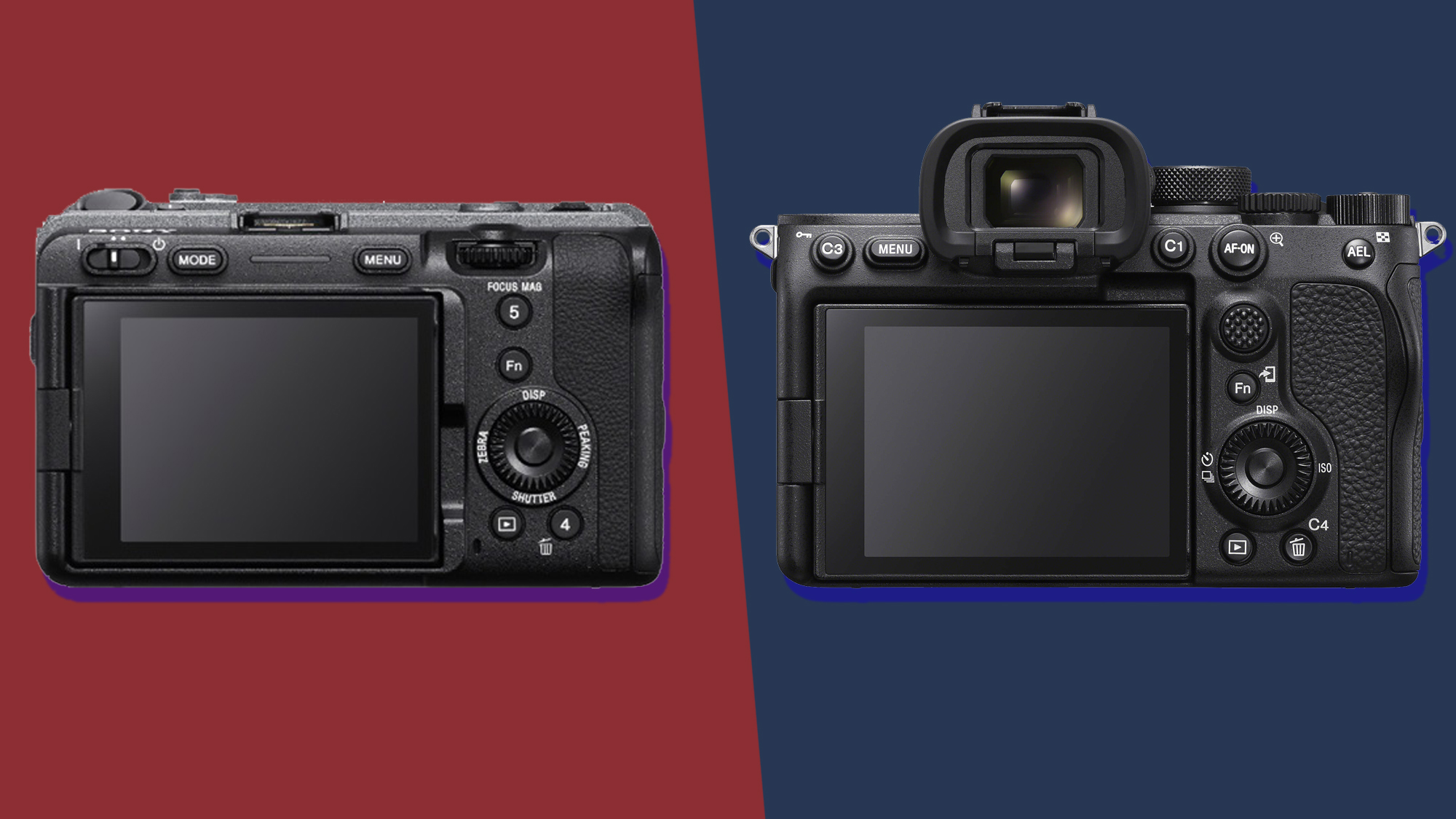
Sony FX3 vs Sony A7S III: which is the best 4K camera for you?

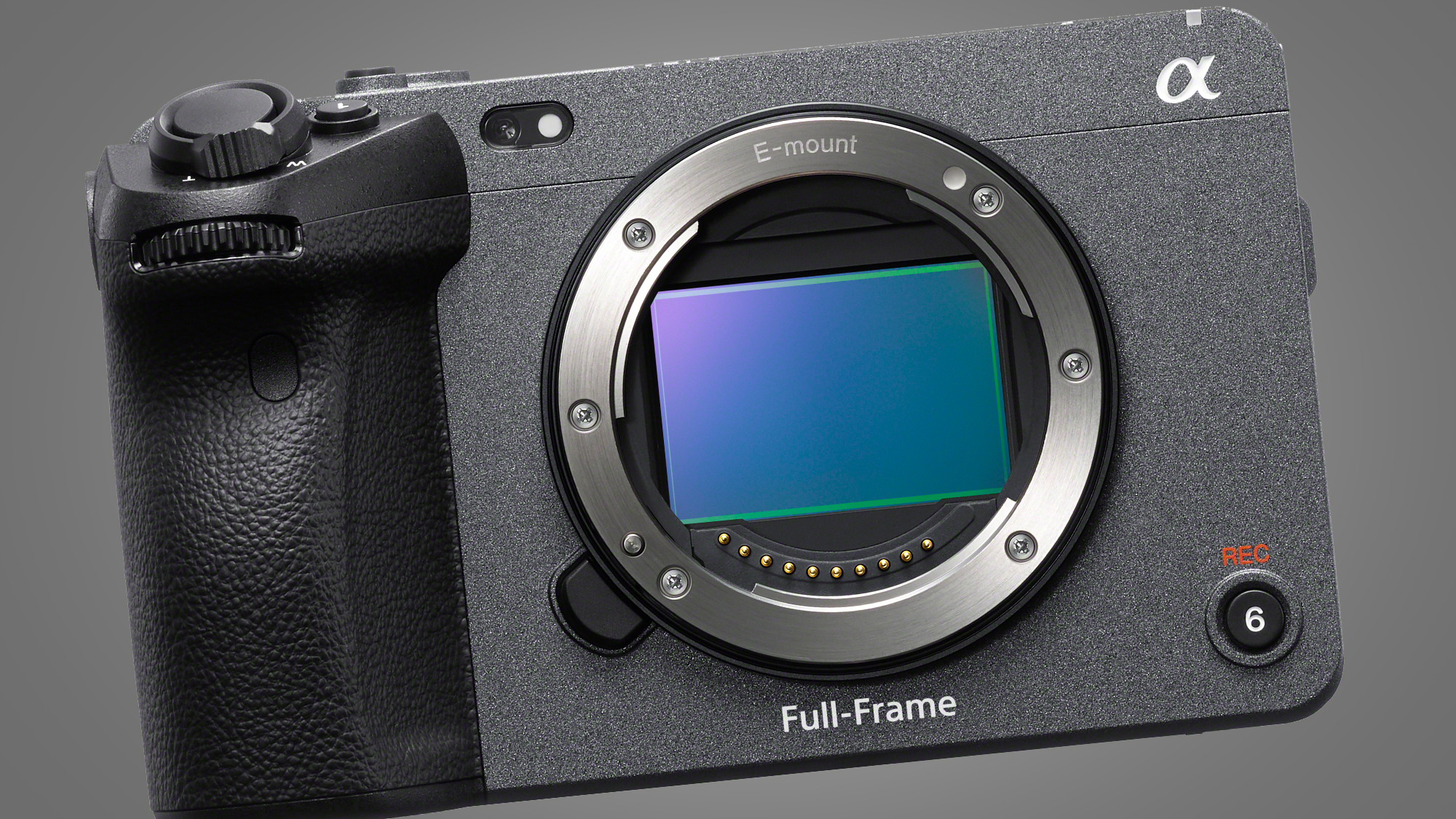
The Sony FX3 has just officially landed – and on paper, it's one of the best compact cinema cameras you can buy.

But the FX3 is also potentially confusing for anyone in the market for a small, pro video camera. After all, Sony already makes one of its closest rivals, the excellent Sony A7S III. So what's the difference between the two cameras, and which should you buy?

The FX3 is effectively a redesigned version of the A7S III, so there are actually more similarities than differences between the two cameras. The FX3 is also the first camera to straddle the line between Sony's Cinema and Alpha camera lines, which traditionally separate its video and stills-focused cameras.

But even though the Sony FX3 has an Alpha badge, it is a more filmmaking-focused camera than the A7S III. So we've rounded up the x key ways its differs from the A7S III to help you split the two highly capable cameras and decide which one suits your shooting style the best.

Yes, the Sony FX3 and A7S III share the 12.1MP full-frame same sensor and Bionz XR processor, but they also differ in a few key ways... 

Sony FX3 vs A7S III: the 6 key differences

1. The FX3 is smaller, but lacks a viewfinder

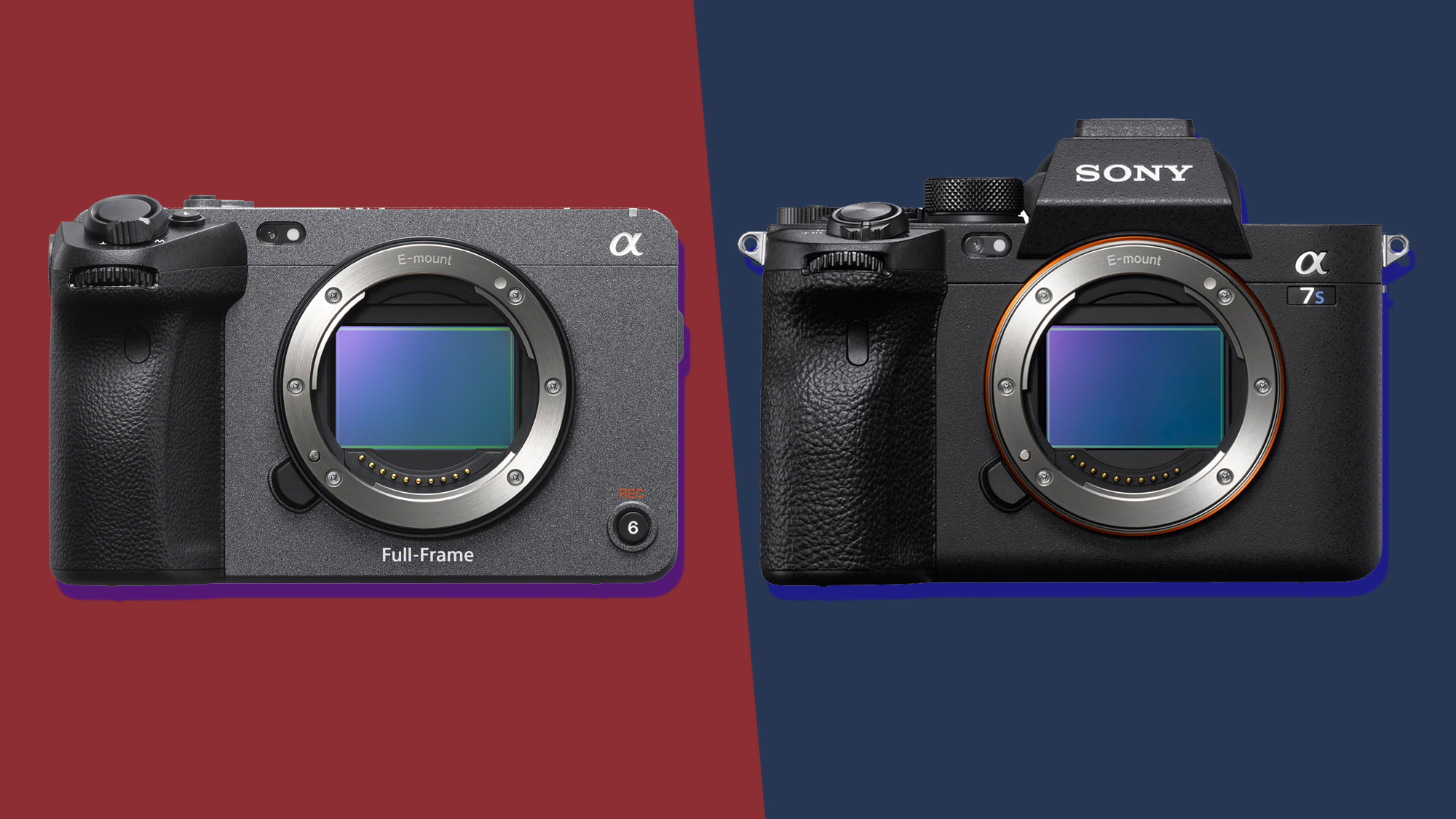
The main clue that the Sony FX3 is even more video-focused than the A7S III is its design. The Sony A7S III is mainly renowned for its video skills, but its body is based on the traditional Alpha style that's grown from Sony's still cameras. This means it has a viewfinder hump and that signature black finish.

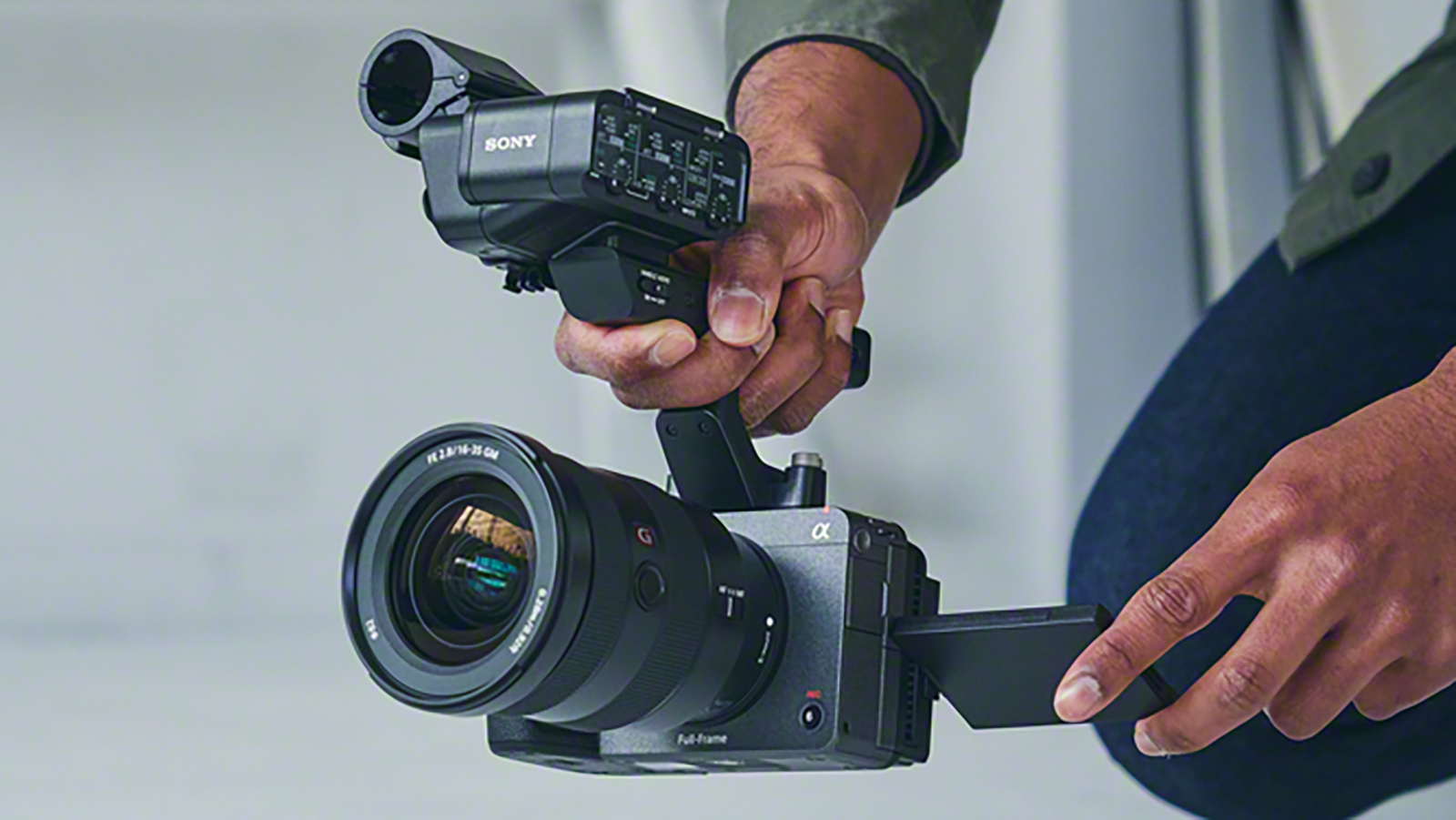
The FX3 drops the electronic viewfinder, a decision that may also put off some filmmakers, in favor of a smaller body that's designed for run-and-gun filmmaking, particularly using its detachable handle.

Sony FX3

(Image credit: Sony)

The FX3 is still beefier and heavier than a mirrorless camera like the Sony A6600, but not by much – and it looks small compared to DSLR-sized rivals like the Canon EOS C70.

In practice, the size difference between the FX3 and A7S III will be negligible, with the cameras respectively weighing in at 715g and 699g (including batteries). Instead, the design differences are simply tailored towards different shooting styles...

2. The FX3 comes with a handle that has XLR ports

While it's possible to add a cage to the Sony A7S III, it's mainly designed to be used handheld in a similar style to a stills camera – and that's where it differs from the FX3.

The FX3 comes bundled with a detachable handle, which isn't just for holding the camera steadily from above. This handle also includes twin XLR/TRS terminals, which are the standard for pro audio – and are something that the A7S III lacks out of the box.

Sony FX3

(Image credit: Sony)

Sony does sell an XLR adapter kit, which lets you add two XLR jacks to A7S III, but it's expensive and arguably a little more clunky than the handle that comes with the FX3. Out of the box, there's no doubt the FX3 is the more advanced camera for those who need high-quality audio to go with their 4K video.

3. The FX3 has a tally lamp and zoom lever

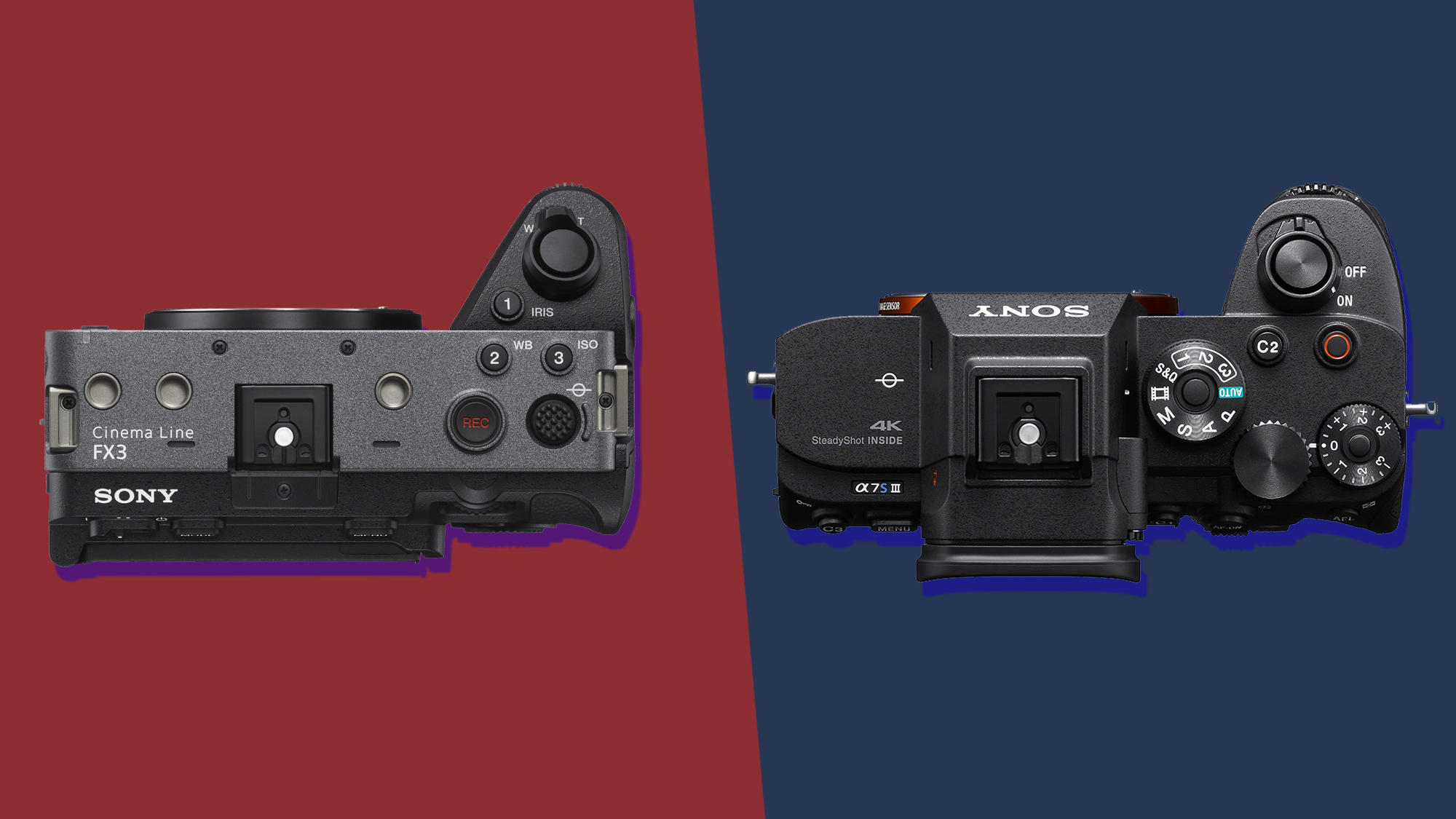
A couple of other potential advantages for filmmakers on the FX3 are its inclusion of a tally lamp and zoom lever, which are both lacking on the Sony A7S III.

A tally lamp is a small light that lets both the camera operator and subjects know that the camera's recording. The Sony A7S III doesn't have this, though there is an alternative in the form of its 'Emph display during rec' option in the menus, which puts a red frame around the screen when you're recording.

Sony FX3

(Image credit: Sony)

Slightly more curious is the FX3's inclusion of a zoom lever. We say curious because only two Sony lenses – the FE PZ 28-135mm f/4 and FE C 16-35mm T3.1 – currently have a built-in power zoom motors that will work with this lever. 

But Sony says that its electronic Clear Image Zoom function – which lets you get 2x zoom with any lens by intelligently creating pixels, rather than simply cropping – is very popular with pro filmmakers, and this function will also work with the FX3's zoom lever. 

4. The FX3 has cooling fans for longer record times

The Sony A7S III impressed us with its ability to handle the heat generated from recording long 4K clips – in fact, we were able to shoot continuous 4K video for well in excess of 30 minutes and didn't once see an over-heating warning.

But the Sony FX3 promises to take this even further thanks to its inclusion of an active cooling fan. It's not the only small, full-frame camera with a fan like this – the Panasonic Lumix S1H also has a fan chamber to help it shoot video for longer periods. And like the S1H, the FX3's fan doesn't affect its resistance to moisture or dust, either.

What specs do the Sony FX3 and Sony A7S III share?

Sony FX3

(Image credit: Sony)

12.1MP BSI full-frame sensor
Bionz XR processor
Shoot 4K/120p or FHD/240p video
Record in 10-bit 4:2:2 internally
Expanded ISO range of 80-409,600
15-stop dynamic range
Have S-Cinetone, S-Log3/2 profiles
5-axis image stabilization
Same Hybrid AF autofocus system
16-bit raw video via HDMI port
Twin CFexpress Type A / SD slots
Same NP-FZ100 battery
Dust and moisture-resistant
Same touchscreen menu system

But it does mean that the FX3 is promising completely 'uninterrupted' 4K/60p shooting, which might push it ahead of the A7S III for those who regularly shoot long clips like one-shots or interviews. 

The FX3 also has the same 13-hour maximum continuous recording time as the A7S III. All of which means that card capacities and battery life are likely to be more of a limiting factor than overheating. 

5. The FX3 has built-in thread holes for accessories

Another useful, filmmaker-friendly design feature on the FX3 are its thread holes, which effectively mean it has a built-in cage to help you turn it into a mobile video rig.

You get five of these 1/4-20 UNC thread holes on the body, and a further three on the bundled handle. Unlike the Sony A7S III, this means you're unlikely to need to add a cage in order to add accessories like a cold-shoe mount for adding, for example, a wireless microphone to your setup.

Sony FX3

(Image credit: Sony)

It's possible to get a similar setup on the A7S III with an additional cage, but it's another example of how much more pro video-oriented the Sony FX3 is out of the box compared to its Alpha counterpart.

6. The Sony FX3 is pricier than the A7S III

The Sony A7S III is more affordable than the FX3, and not just because it's a little older, having arrived in July 2020.

The A7S III's recommended retail price back then was $3,499 / £3,800 / AU$5,999 and it hasn't really shifted from that yet. The FX3 is a fair chunk pricier at $3,899 / £4,200 (around AU$7,485).

But when you factor in the price of an XLR adapter for the A7S III, which comes bundled with the FX3, then the two costs around the same. This makes sense, as the FX3 lacks a viewfinder, but compensates with features like active cooling. Which means your choice between the two is likely more down to your shooting style than your budget.

Sony FX3 vs A7S III

(Image credit: Sony)

Takeaway

The Sony FX3 and Sony A7S III are variants on the same concept – they're both small, 4K full-frame cameras that are particularly strong in low-light and offer highly compact setups for solo shooters.

But while the FX3 is capable of shooting stills, there's no doubt it's the more video-oriented cinema camera. It has the bundled handle, XLR audio jacks and active cooling that make it, on paper, a more complete camera for filmmakers out of the box.

While those who splashed out the A7S III might feel slightly aggrieved that the FX3 has arrived just six months on, they will largely be hybrid shooters with slightly different needs. 

Sony says the A7S II remains targeted at those who need a mix of video and stills, like wedding photographers who don't need to make large prints, concert photographers and astrophotographers. For those kind of shooters, the A7S III's 4K video powers are important, but the FX3 is a camera that's really built around them.

It's a subtle difference, but we're looking forward to seeing how the Sony FX3 stacks up against other rivals like the Canon EOS C70 and Blackmagic Pocket Cinema Camera 6K Pro soon.


from TechRadar - All the latest technology news https://ift.tt/3kuc8Ik
Share:

More OnePlus 9 and OnePlus Watch details leak out online

The anticipation around the OnePlus 9 and OnePlus Watch launches is steadily growing, and according to the latest information leaked online, both devices are going to get an official unveiling on the same day.

91mobiles and well-known tipster Ishan Agarwal have suggested that the middle of March is when we should expect a grand unveiling: and we'll see the OnePlus Watch, the OnePlus 9, the OnePlus 9 Pro and the OnePlus 9R appear together.

That final device is the handset previously known as the OnePlus 9 Lite, and will be the more affordable model in the series. The OnePlus 9R name is one that only began circulating a few days ago.

Agarwal says that promotional teasers will be appearing "VERY soon", and with March almost upon us at the time of writing, we could see the OnePlus marketing machine roll into action any day now – so watch this space.

Meanwhile, Greek outlet TechManiacs has got hold of what it claims are screenshots from the OnePlus 9 Pro, showing off some of the specs of the device. It's also going to come running Android 11, as we would expect.

Inside the phone it looks like we've got the Snapdragon 888 processor, with 8GB of RAM and 128GB of storage at least one of the available configurations. The screen is listed as a 6.7-inch display with a 120Hz refresh rate.

The camera module is listed as a quad-lens 48MP + 50MP + 8MP + 2MP affair, although we don't get any details of what to expect in terms of optical zoom or an ultrawide mode. There are also a couple of screenshots of the camera app interface.

Those details largely match up with previous rumors about what to expect from the OnePlus 9 phones, and it certainly looks as though the Pro edition is set to be one of the most powerful smartphones of 2021.


from TechRadar - All the latest technology news https://ift.tt/2ZUvT2u
Share:

Windows 10 gets a fix for annoying stuttering in some games

Windows 10 has received a preview version of a cumulative update, and it’s one that gamers might want to apply if they’ve been having any kind of trouble with stuttering or flickering (or indeed other rendering issues) when playing certain games.

As Microsoft states, patch KB4601382 (for Windows 10 May 2020 Update and October 2020 Update) applies the following fix: “Updates an issue with screen rendering after opening games with certain hardware configurations.”

As it’s in preview, you’ll have to manually find and install this bunch of fixes via Windows Update (this patch will be next month’s cumulative update when it lands on March 9 – but folks who are exasperated with the bugs that it cures may just want to grab it now to save them from another week of pulling their hair out).

As mentioned, as well as the problems with games, there are other fixes here. These include several display-related bugbears like an “issue that might cause video playback to flicker when rendering on certain low-latency capable monitors”, and incorrect refresh rates showing under advanced display settings when it comes to HDR-capable monitors.

KB4601382 also delivers a solution for unexpected screens popping up in the Windows 10 setup experience (initial out of box installation process, that is).

Caution first

If you’re not affected by any of these issues, or at least not bothered by them to any pressing degree, it’s best to steer clear of a preview update – because as the name suggests, these are still in testing, so may be rough around the edges or have unintended consequences in one form or another.

Strictly speaking, it’s best to wait for the finalized patch (indeed, as we’ve seen many times in the past, even the finished version can mistakenly introduce fresh bugs – so preview updates need to be treated with some caution).

Via Windows Latest


from TechRadar - All the latest technology news https://ift.tt/3bKYZXp
Share:

How to Apply for High Security Registration Plates in Delhi: All You Need to Know

Delhi Transport Department has made it mandatory for all vehicle owners in the national capital to install the high security registration plate (HSRP) on your vehicle. Car owners can apply for one by logging on to bookmyhsrp.com. Violators can be fined up to Rs. 10,000.

from Gadgets 360 https://ift.tt/2ZVvPPN
Share:

Fortnite’s approach to guest characters is aggressively dull

There’s no denying the monolithic success of Fortnite Battle Royale. Like a phoenix rising from the ashes, the mode once considered ancillary to Save the World – Fortnite’s co-op-centric horde mode that pitted players against waves of zombies – eclipsed it in no time at all.

In the years since, Fortnite has surpassed other battle royale giants like PUBG to become the undisputed leader in terms of player numbers, revenue and in-game events. It's a shame, then, that its crossover events with other franchises feel woefully tacked on.

In the long term, Epic Games' commitment to guest character inclusion in Fortnite usually ends up being a total misrepresentation of whoever’s in the spotlight at the time. Usually, these boil down to a character skin or two and a brief marketing window, nothing that will shake up Fortnite's status quo.

Crossover conundrums

Fortnite

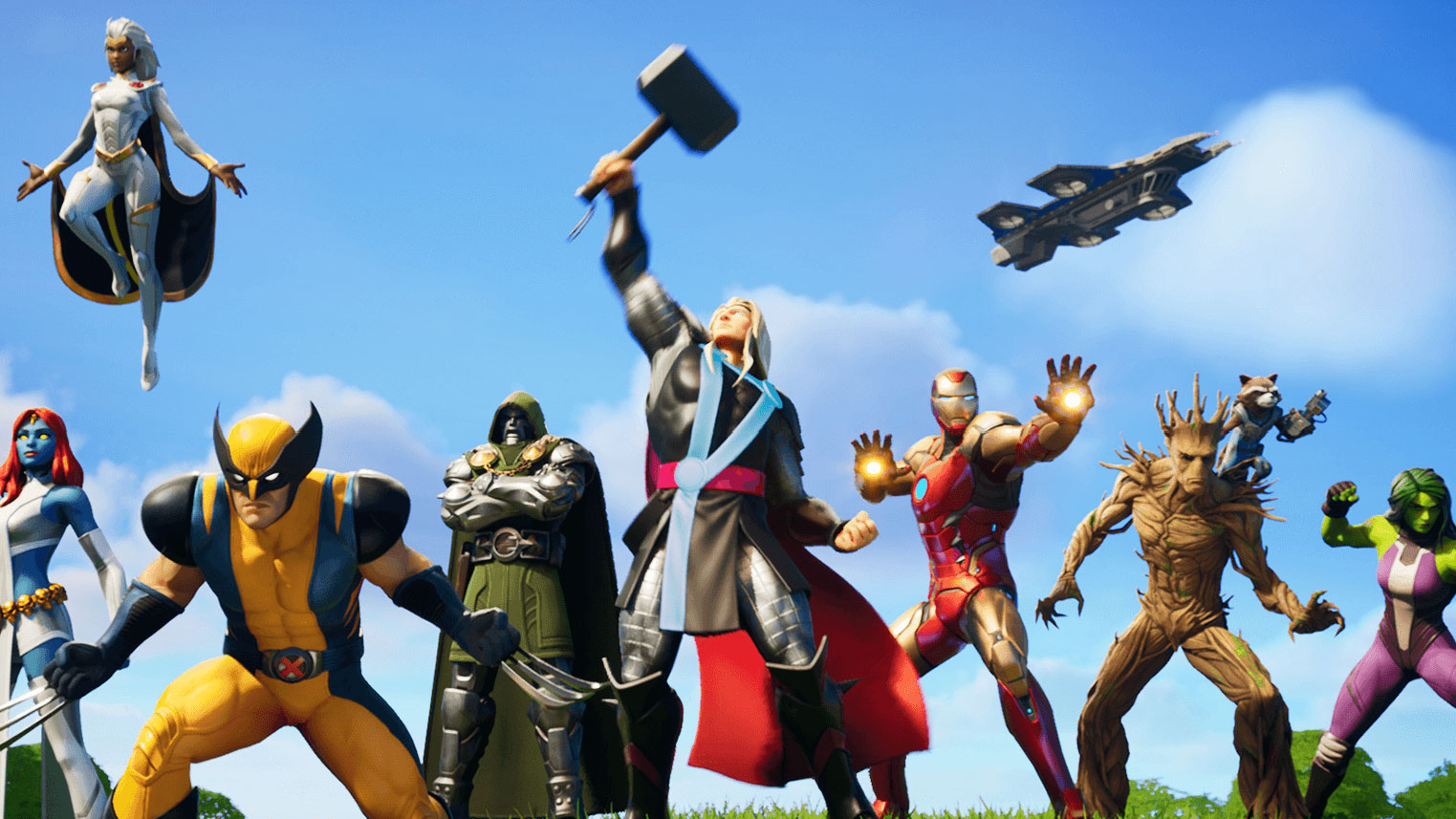
Fortnite admittedly did a fantastic job integrating Marvel and DC characters (Image credit: Epic Games)

Fortnite’s history with crossover content dates back almost three years at this point. Its first big collaboration was with Marvel to promote Avengers: Infinity War. In this event, a player lucky enough to find the iconic Infinity Gauntlet could transform into Thanos, the primary villain of the latter Avengers movies.

It was an interesting way for Epic to test the waters on future crossover events. The event was only available for a limited time, and it provided a unique, somewhat refreshing spin on the Fortnite formula in the form of a powerful and player-controlled threat on the map.

Fortnite continued to work with Marvel, offering skins of beloved characters like Iron Man, Captain America and Captain Marvel to name but a few, and these represented perhaps the peak of Fortnite’s crossover potential, as Chapter 2: Season 4 implemented a swathe of map changes alongside unique Marvel-themed items and powers.

It got more interesting when Epic Games went on to throw DC characters into the mix. Aquaman, Batman, The Flash et al are able to join the fray alongside or against Marvel’s best, technically making Fortnite the first official Marvel vs. DC crossover game. There is a problem with that, though, as I’ll get into later.

Things only grew increasingly puzzling from there. Fortnite began to pepper in crossovers and obtainable guest character skins from a plethora of different franchises in the following years. Many felt right at home on Fortnite’s chaotic, ever-changing island map, including Marvel’s own Deadpool, whose manic fourth-wall-breaking charm fit effortlessly into the game’s mayhem.

Others still felt incredibly bizarre. Additions like NFL players, God of War’s Kratos and Street Fighter’s Ryu and Chun-Li all feel remarkably out of place wielding weapons largely based on real-world guns.

V-Buck where it's due

Sephiroth Smash

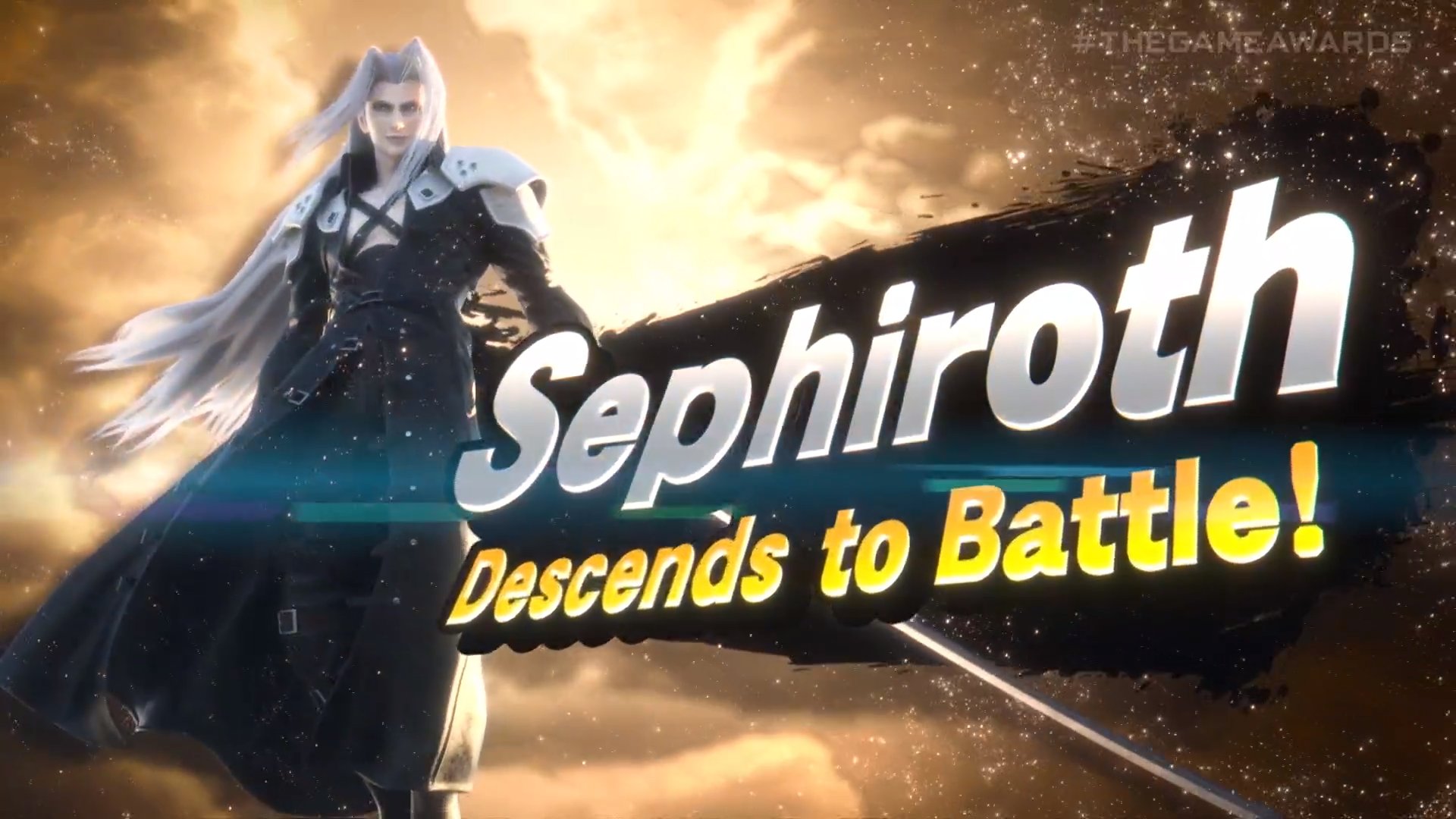
Super Smash Bros. remains the undisputed king of the crossover (Image credit: Nibellion (Twitter))

I have to admit that if I was a child watching all this crossover chaos unfold, I would be beside myself with joy. Fortnite has intentionally marketed itself as a giant interactive toy box with its scattershot approach to crossovers. There’s something undeniably appealing about watching Stranger Things’ Hopper mow down The Joker with a minigun.

"Smash...shows how a developer can elevate a game by handling guest content with care. These games speak to something bigger than the individual characters - they are representing what makes those franchises so special and why people love them to this day."

Yet therein lies the issue – these lovable characters barely do anything that is distinctly associated with them. They act like any other outfit you can obtain in Fortnite, albeit originating from recognizable third-party brands. Some are graced with unique emotes at least, such as Chun-Li’s Lightning Kick and She-Hulk’s transformation. Nevertheless, I can’t see these guest appearances as anything other than a cynical cash grab.

For the sake of comparison, let’s look at another game that heavily features guest characters as paid downloadable content, that being Super Smash Bros. Ultimate. What does Smash do right that Fortnite doesn’t? Well, the key is in how these characters are represented.

Since Super Smash Bros. Brawl on the Wii, the series has had a steady focus on the inclusion of characters outside of Nintendo’s purview. Brawl kicked off the insanity in 2008 with Sonic the Hedgehog and Metal Gear’s Solid Snake. 

2018’s Super Smash Bros. Ultimate exploded in terms of guest content. Since that game’s launch, characters like Joker from Persona 5, Steve from Minecraft and Final Fantasy VII’s infamous villain Sephiroth all made playable appearances.

Each of these characters is celebrated in Smash with painstaking attention to detail. Each features moves and abilities recognizable from their games of origin, and they’re always paired with a stage showcasing the game or series they’re from, alongside a suite of music tracks.

Smash, alongside other crossover-happy games like SoulCalibur 6 and Tekken 7 shows how a developer can elevate a game by handling guest content with care. These games speak to something bigger than the individual characters – they are representing what makes those franchises so special and why people love them to this day.

Meanwhile, Fortnite’s approach to guest characters smacks of throwing wads of cash at whatever’s popular at the moment. Given Fortnite’s insane success, Epic certainly has the financial power to do this. Sadly, the game time and again chooses a flavor-of-the-month junk food approach, just because it can.

Quantity over quality

Fortnite Star Wars

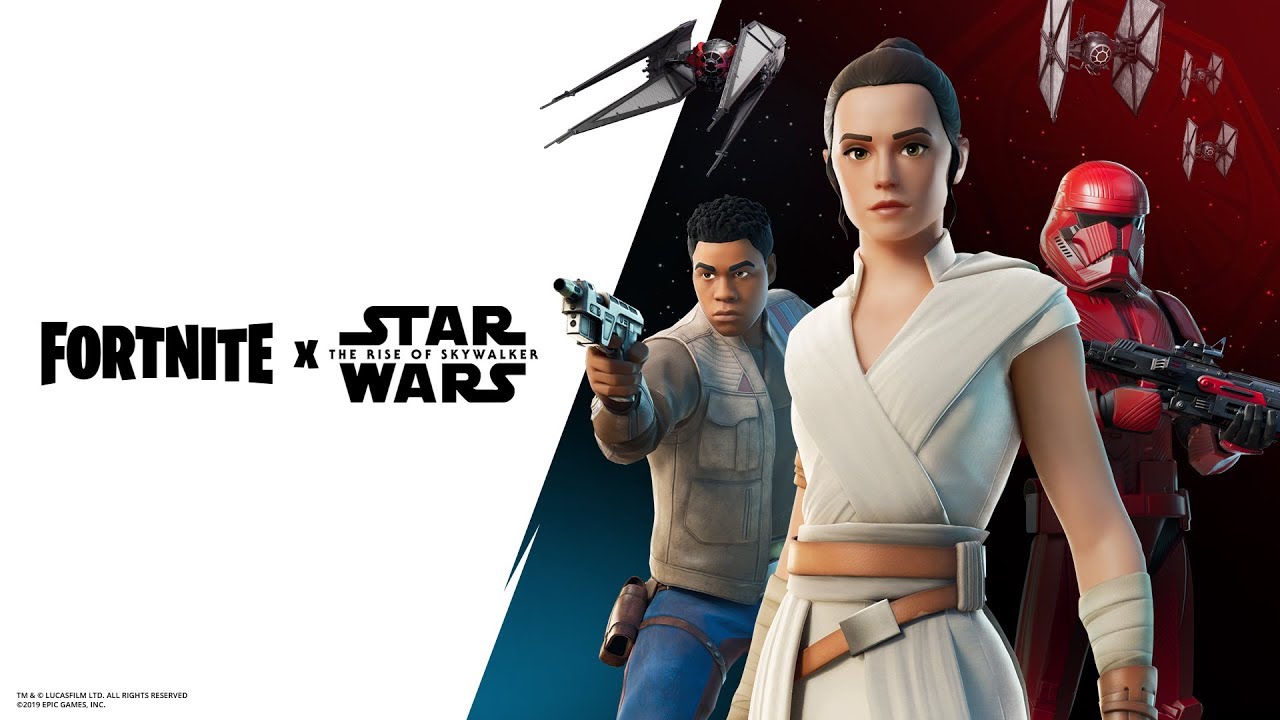
Fortnite is capable of good crossovers, but it needs to try harder (Image credit: Epic)

I want to see Epic do better with its guest inclusions in Fortnite. It has the resources and manpower to be able to do so. I don’t want to play as Master Chief because “oh, hey, that’s Master Chief. I like Master Chief.” I want to play as him because I love Halo as a whole and want to be reminded of what makes that series so good in the first place. If I’m playing as Master Chief, I want movement to feel swift but decidedly heavy. I want to hear those shields pop when I’m low on health, ringing out that iconic warning klaxon.

"Fortnite could really benefit from featuring less crossovers with more content in each one. How cool would it be if Chun-Li could perform her iconic Lightning Kick attack to knock down structures in place of the familiar pickaxe?"

A 'less is more' approach could work wonders here. Fortnite could really benefit from featuring less crossovers with more content in each one. How cool would it be if Chun-Li could perform her iconic Lightning Kick attack to knock down structures in place of the familiar pickaxe?

How about a Halo themed event period where we can see the iconic ring on the horizon, with Covenant ships frequently flying over the island for an extra layer of fan immersion? To its credit, the actual Halo event did feature a recreation of the classic Blood Gulch map, but it was locked behind Fortnite’s Creative Mode and wasn’t hugely substantial. 

If they’d have thrown in event-specific items and weapons like Overshields and Halo’s iconic arsenal, paired with that goosebump-inducing main theme, you’ve got a winner of a collab in my book.

The problem here, of course, is that Fortnite is a very different game compared to the likes of Super Smash Bros. Fortnite operates as a live service – a game that is being constantly updated with new content. 

The quick turnover of Fortnite’s Battle Pass system leaves more substantial events with little room in the spotlight. Instead of giving crossover content more room to breathe, Fortnite is trapped in the perpetual live service cycle, ready to swap out content based on whatever the zeitgeist is.

As such, I’ve grown so very tired of Fortnite’s approach to crossover content, even when it’s representing characters and series I actually love. The bitesize nature of these inclusions feel like they come and go in a flash with little fanfare. That’s the exact opposite of what guest characters are supposed to achieve. 

While I’ll always remember Super Smash Bros. Ultimate as the game that let me beat up Sephiroth with Terry Bogard in front of a Minecraft village, I’m worried that Fortnite’s legacy will be buried in a veritable heap of forgettable crossovers that the game could have done so much more with.

  • Fortnite mobile: how to get Fortnite on Android, and why you can't on iPhone


from TechRadar - All the latest technology news https://ift.tt/3r2A87P
Share:

Is open source the future of office software?

While many people will be perfectly happy using Office 365 and Google Workspace products for all their word processing and spreadsheet needs, others will prefer something a little less...proprietary.

There are a couple of significant benefits of opting for an open source alternative to Office; the products are almost always free and often benefit from continual improvement from a large network of committed developers.

We caught up with Italo Vignoli of The Document Foundation, which oversees popular open source productivity software suite LibreOffice, to hear more about the project and where it is headed in the future.

What is The Document Foundation? Does it only support the development of LibreOffice or does it have a wider mandate?

The Document Foundation was announced at the same time of the LibreOffice fork, as the home of the LibreOffice community. All activities are focused on the LibreOffice community, but are not limited to the development of the FOSS office suite.

There are other major projects, such as the participation in the ODF (Open Document Format) Technical Committee for the advancement of the only ISO standard file format for true interoperability, the development of import/export filters for legacy and current proprietary file formats at the Document Liberation Project, the participation in advocacy groups for FOSS in public administrations (in Asia, Europe and Central/South America) and the support of native language communities (LibreOffice is released in 119 different language version, more than any other software worldwide).

Could you explain the reasons that led to suffixing release post v7.1 as "Community"?

The sustainability of FOSS projects doesn't happen by magic, especially if software is widely deployed in enterprise environments such as LibreOffice. We launched the LibreOffice project back in 2010, based on the following sustainability concept: individuals would support back-office and development of features that are not targeted to enterprise deployments with donations; volunteers would contribute their time to develop their own features and to contribute to other activities such as localization, quality assurance, documentation, design and marketing. Enterprises, meanwhile, would support the development of mainstream features through the purchase of LTS versions or the direct engagement of developers from ecosystem partners, who are firmly committed in merging all features in a timely manner on the master branch at The Document Foundation (TDF), for the reciprocal benefit of all individual and enterprise users.

As a result, we would have had a "vanilla" version released by TDF and supported solely by volunteers (who can provide assistance to individual users, according to their own schedule), and an enterprise version with LTS (Long Term Support) from professionals, backed by SLAs (Service Level Agreements).

This has worked for a while, but over time the number of enterprises supporting the project has shrunk, and as a consequence the number of new features has also shrunk. At the moment, we estimate than less than 10% of LibreOffice enterprise users are supporting the project by "giving back" through ecosystem partners, as they deploy the vanilla version from TDF and ask for support to volunteers. As we do want to stay loyal to the FOSS nature of LibreOffice, and avoid a dual licensed open core software (where the enterprise LTS version has more features than the free version, but is released under a proprietary license), we have added the "community" label to encourage enterprises to seriously consider deploying the version optimized for their needs.

Of course, a simple label is not enough, so we will develop and engage in communication activities focused on educating enterprises about supporting FOSS projects effectively and responsibly. FOSS has become pervasive, and enterprises  should consider that focusing on the zero cost of the software can seriously harm projects they are now relying on as strategic assets of their infrastructure, because it is short-sighted, as you save a lot today by not paying a dime, but you have to spend a lot tomorrow if the project is not able to self sustain, and you have to switch back to a proprietary solution with a huge price tag attached.

For people who aren’t aware, could you give us a 20,000 foot view of the LibreOffice ecosystem, including how you engage with the ecosystem partners?

The LibreOffice ecosystem is large and diverse; there are volunteers, both individuals and native language communities (i.e. individuals organized in groups based on their language, plus their geographical locations if the language is spread over different continents).

There are companies focused on LibreOffice development and other companies focused on building added value around LibreOffice, e.g. by providing services, consultancy and support. There are FOSS organizations such as FSF, FSFE, GNOME and KDE, and large corporations like Google, who are backing the LibreOffice project as they support our philosophy. Organizations are usually represented inside the TDF Advisory Board, which is meeting on a quarterly basis to discuss the progress of activities.

Most of the engagement, though, happens spontaneously on the typical tools of FOSS projects such as mailing lists and various chatrooms on several messengers. This is something which happens only inside open source projects, where meritocracy wins over bureaucracy.

One of the most interesting aspects of the project for many is LibreOffice Online. However, getting the office suite to run inside a web browser isn’t a priority for the project. Why is that, and will the stance change with the WebAssembly port finally approaching production quality?

A cloud solution based on the LibreOffice Technology has been available for several years from Collabora, which are the main code contributors of the Online branch, and is called Collabora Online. The WebAssembly port by allotropia will provide a different approach to getting LibreOffice into the browser. Both are based on the same platform for personal productivity called LibreOffice Technology, which offers unparalleled advantages over the technical puzzle of other office suites, which use a different engine and a different file structure for desktop, mobile and cloud.

The fact that a cloud solution based on LibreOffice is not released by TDF is a detail, and cannot be seen as a lack of interest from the project. Rather the contrary - deploying a cloud office suite is not a trivial task, as you have to associate a secure sign-on solution and a cloud environment for file storage and access rights, and as such needs the resources of a professional service provider. At the moment this product is available from our commercial ecosystem, and this is perfectly in line with the spirit of the project.

What are some of the interesting ongoing developments that you’re particularly looking forward to landing in LibreOffice?

LibreOffice has a large feature set, which is comparable to proprietary solutions and is larger than in many other office suites. In addition, LibreOffice has a stronger focus on interoperability than any other office suite, including Microsoft Office. So, in a time where sharing digital content is more important than specific features, the development focus will be on compatibility with proprietary file formats.

More broadly speaking, what are the priorities for the project in the near future?

In addition to improving the overall quality and interoperability of LibreOffice, the project has priorities which are typical of FOSS projects, such as increasing the number of language versions, and advocating the adoption of the Open Document Format (ODF) and LibreOffice by governments and large organizations.


from TechRadar - All the latest technology news https://ift.tt/3kwg7Ez
Share:

Categories

Rove Reviews Youtube Channel

  1. Subscribe to our youtube channel
  2. Like our videos and share them too.
  3. Our youtube channel name Rove reviews.

WITNUX

This website is made by Witnux LLC. This website provides you with all the news feeds related to technology from large tech media industries like GSM Arena, NDTV, Gadgets 360, Firstpost and many other such ates altogether at technical depicts so that you need not go to several sites to view their post provide you advantantage of time.

From the developer
Tanzeel Sarwar

OUR OTHER NETWORKS

OUR YOUTUBE CHANNEL

ROVE REVIEWS PLEASE SUBSCRIBE

OUR FACEBOOK PAGE

The Rove Reviews

Support

Trying our best to provide you the best DONATE or SUPPORTour site Contact me with details how are you gonna help us